Vidi Corp builds secure, scalable API integrations on a project basis, connecting all of your platforms so your data moves where it needs to go without you lifting a finger. Every integration is scoped and built around what your business actually runs on, and the results speak for themselves.
Our clients cut manual data consolidation by 95%, and watch report generation drop from 48 hours to under 5 minutes. Automated API feeds reduce data entry errors by 80%, while real-time visibility helps teams make strategic decisions 40% faster. All told, that adds up to more than 30 hours a month freed from manual reporting, time your team can spend on work that actually moves the needle.
1000+
Completed
projects
600+
Happy
clients
20k+
Hours
worked




Your business runs on multiple platforms, but your team should not have to copy, export, reconcile, and reformat data manually. Our API integration specialists help you automate data extraction, connect cloud applications, centralize business information, and create dependable data flows for reporting, operations, finance, marketing, and customer service.
We build practical API integration solutions that reduce manual work, improve reporting accuracy, and give leadership faster access to the information they need. Whether you need a single connector, a complete integration architecture, or a custom API endpoint, we design the solution around your systems, processes, and business goals.

Most businesses run on tools that don’t talk to each other, which means someone on your team is the connection: copying details across, creating records by hand, keeping everything in sync. It works, until it doesn’t. Details get mistyped, updates get forgotten, and the person who knows the routine goes on holiday and everything stalls. The real cost isn’t just the hours spent on manual entry. It’s the errors that creep in, the delays between one team finishing and the next one starting, and the nagging doubt about which system holds the correct version of anything.
We remove that job entirely. A typical example is connecting your CRM to your project management system. When you win a deal, you press one button and a client onboarding task is created automatically, with all the right details already filled in: the client’s name, the contact information, the project value, and the deadline. Your delivery team gets to work the moment the deal closes, not whenever someone remembers to set things up. No retyping, no missed steps, no waiting on whoever usually handles it.

Plenty of teams lose hours every week downloading data, stitching spreadsheets together, and rebuilding the same report. We connect the platforms you report on directly to your reporting setup, so the numbers refresh themselves. The report your team used to assemble every Monday morning simply appears accurate and up to date.
If your situation doesn’t fit neatly into one of these, that’s fine. These are the most common patterns, not the limits of what we build. Tell us what you’re trying to connect and we’ll tell you how we’d approach it.

Our API integration consultants connect APIs into Power BI, Tableau, Looker Studio, DOMO, Azure SQL, BigQuery, SQL Server, SharePoint, and other destinations. This provides a stable data foundation for executive dashboards and self-service analytics.
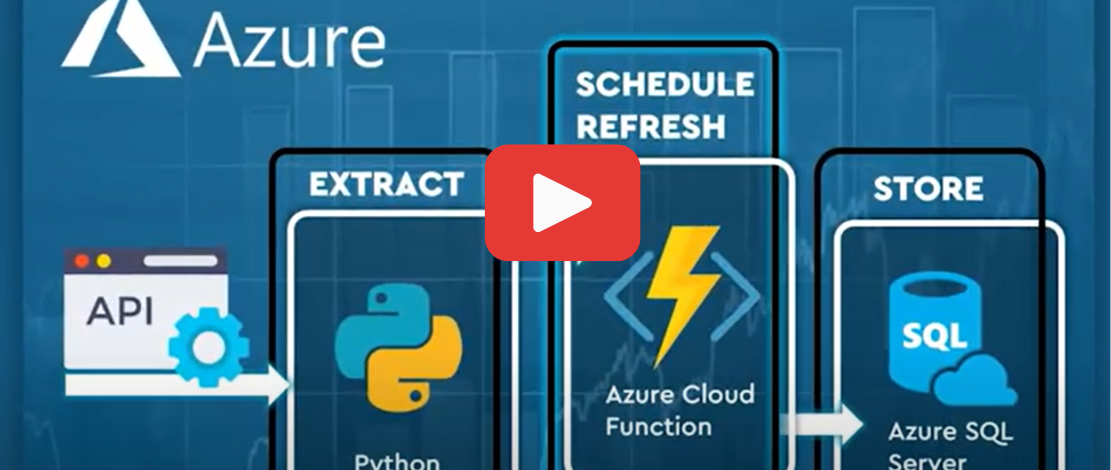
If your reporting or analytics depend on data sitting inside a third party platform, we’ll build an integration that pulls it through your API and lands it in your database on a schedule. Your data arrives clean, structured, and ready to query, so your reports always reflect what’s actually happening rather than the last time someone ran an export.

Most API integrations run on a schedule, and for plenty of reporting that’s exactly right. But sometimes a schedule isn’t fast enough. When a customer pays an invoice or a lead fills in a form, you want your other systems to know straight away. That’s what webhooks do: the source system sends the data out the instant an event happens, so a new sale lands in your database within seconds. We set up webhook integrations end to end, from configuring the source platform to building the endpoint and routing the data wherever it needs to go, including the dependable bits like validating payloads, managing retries, and making sure no event gets lost. Not sure whether you need webhooks or a scheduled refresh? Tell us what you’re working with and how fast the data needs to move, and we’ll recommend the setup that fits.

Our custom API integration services are built for businesses with complex workflows, unique data structures, legacy systems, or API limitations that standard connectors cannot handle. We design integrations around your exact process, using clean data models, custom endpoints, batching, retries, caching, and error handling to improve reliability, reporting accuracy, and automation performance across finance, ERP, marketing, e-commerce, payroll, and operational systems.
Unlike most providers who leave you to build integrations from scratch, we offer 10+ ready-made integrations that automatically pull your data into Azure SQL Server. Set them up yourself, try them risk-free for 14 days, and use the extracted data for analysis or to build further automations.

Quickbook Online

ClickUp

Shopify

Other Ready-made API integrations
Our consultants have experience in connecting over 100 data sources, including:
We pull everything into one place, so you no longer have to jump between dashboards to piece the story together. If you’ve ever tried to work out which campaign actually drove last month’s revenue by exporting from five different tools and stitching the spreadsheets together, you already know the problem we solve.
Each platform tells you its own version of events. Your ad accounts report clicks and spend, your analytics shows sessions and conversions, your CRM holds the deals, and your store records the sales. None of them agree with each other, and none of them shows the full journey from first click to closed revenue. By connecting them through their APIs, we bring all that data into a single view, automatically matched and refreshed.






Vidi Corp implemented a cloud-based data solution using secure REST APIs, Microsoft Azure, and a centralized database. The solution reduced manual data consolidation by 95%, reduced data silos from six systems to one, and cut report generation from 48 hours to under five minutes. We also saw an 80% reduction in data entry errors through automated API feeds and a 40% faster turnaround on strategic decisions. They understood requirements quickly and delivered just as fast
Travis Kelley, CEO, War Room Operations

Vidi Corp helped us develop a custom API endpoint to automate payroll data processing and solve a complex API request limitation. Their team handled the API design, business logic, Power BI automation, data processing, and export. The project resolved our duplication issue, reduced connector cycle time, and moved us closer to a sub-three-hour process. Their flexibility and creativity in solving business and technical challenges stood out
Can Akbay, CEO, Strategy & Operations Lead, Integrity Landscape
Vidi Corp automated our Power BI reporting from SAP Ariba by building a Python-based extraction process into Azure SQL Server. The API documentation was outdated, but their team worked through the complexity, identified the additional tables required, and wrote extra code to complete the project. The automation saves around five hours per month and allows us to refresh reporting more often. We appreciated their ability to understand the requirement quickly and go the extra mile.
Lubna Mousa, Senior Global Procurement Manager, Mercy Corps
Manual exports, spreadsheet consolidation, and repetitive data entry consume valuable time. API integrations automate this work so teams can focus on analysis, customer service, operations, and growth.
Clients have saved hours every week or month by replacing manual processes with automated data flows.
When data is copied manually between systems, errors are almost inevitable. Automated API feeds reduce data handling, improve consistency, and create more reliable reporting.
This is especially important for finance, operations, and executive dashboards where accuracy directly affects decisions.
Real-time or scheduled data refreshes give leaders faster access to performance trends. Instead of waiting for manual reports, decision-makers can review current metrics and act sooner.
This can improve strategic planning, cost control, revenue analysis, and operational response times.
Well-designed API integrations make it easier to add new systems, dashboards, automations, and reporting use cases. Your business gains a more flexible data infrastructure that can grow with your needs.
This reduces future rework and helps avoid disconnected point solutions.
No two integrations are identical, but the path from first conversation to working connection is always the same. You’ll know exactly what we’re building, what it costs, and why, before any work begins.

We Identify the Endpoints You Need
Every integration starts with a scoping conversation. We look at the systems you want to connect and pin down the specific API endpoints involved: which data needs to move, where it comes from, and where it needs to land. This is what makes the rest of the project predictable. Once we know the exact endpoints, there’s no ambiguity about what’s being built.

We Define Your Refresh Process
Next, we work out how your data should stay up to date. Some projects call for a full table refresh, where everything is replaced on each run. Others suit an incremental refresh, where only new or changed records come through. The right choice depends on your data volumes, how fresh the numbers need to be, and what your systems can handle, and we’ll recommend the approach that fits.

We Price the Project and Build It
With the endpoints and refresh process agreed, we give you a fixed price based on exactly that scope. No vague estimates, no surprises halfway through. Once you give the go-ahead, we build the integration, test it thoroughly, and hand it over working. You get a connection you can rely on and a clear picture of what you paid for.

Testing, Validation, and Quality Assurance
We validate data accuracy, refresh behavior, field mapping, performance, and edge cases. This includes comparing outputs against existing reports, source systems, or agreed business rules.
Testing ensures that the integration is not only technically functional but also trusted by the business.
API integration services connect different software systems so they can exchange data automatically. This can include connecting SaaS platforms, databases, BI tools, CRMs, ERPs, finance systems, marketing platforms, or custom applications.
The goal is to reduce manual work, improve data accuracy, and make business information available where it is needed.
SaaS integration focuses on connecting cloud-based software applications such as QuickBooks Online, Shopify, Salesforce, GA4, Xero, or ClickUp. API integration is the technical method often used to connect these systems through structured data exchange.
In practice, SaaS integration often depends on API integrations to move data reliably between platforms.
You need custom API integration when standard connectors do not support your data structure, workflow, authentication requirements, refresh frequency, or reporting logic. Custom integrations are also useful when APIs have rate limits, incomplete documentation, or complex endpoint relationships.
A custom approach gives your business more control over how data is extracted, transformed, and used.
Yes. We build API integrations that extract data from SaaS platforms, custom systems, and databases into Power BI-ready structures. This can include direct API connections, intermediate SQL databases, cloud warehouses, scheduled refreshes, and custom data models.
For performance and reliability, we often recommend storing API data in a database before using it in Power BI.
Yes. We have experience with ready-made data integrations and custom API connections for platforms such as QuickBooks Online, Shopify, Xero, ClickUp, Zoom, and other business systems.
These integrations can reduce implementation time and help your team reach value faster.