

The Power Pages examples you’re about to see are all real-life portals built for actual clients by our Power Pages consulting team. With years of experience working with businesses from all sorts of industries and functions under our belt, we know how to tailor Power Pages to meet the unique needs of each organisation. We’ve built portals for all sorts of clients – from government agencies to energy companies to leading fractional CFO practices – and every single one of these examples was designed to solve a specific problem for a real business.
These aren’t template examples you can just copy and paste – each portal was built from scratch to fit the client’s own data sources, workflows, and user access needs. That’s why they all look and behave differently from the standard Microsoft templates. If you see something in this article that you think could solve a challenge you’re facing, our team can build a custom solution tailored to your business.
This article covers the most common Power Pages use cases that our team works on, from customer portals and partner portals to public reporting platforms and e-commerce solutions. We’ll show you who uses them, what they’re used for, and how our clients have put them to work in real life. If you’re interested in talking about building a Power Pages portal for your business, we’d be happy to chat at the end of this article.
Microsoft Power Pages is a platform that lets you build professional-looking websites, customer portals, partner portals, and public business applications that can be used by both internal and external users. That makes it great for all sorts of scenarios, from collaboration tools to secure data access and reporting portals. Power Pages is built on Microsoft Azure, which provides the underlying security framework, scalability, and integration capabilities that the platform relies on. This means Power Pages can handle big user volumes without requiring a custom infrastructure – the backend is all handled for you.
Security is built into Power Pages at every level. You can choose from a range of authentication methods, including Microsoft accounts and external identity providers, so you can control exactly how users verify their identity before they can get in. Data is encrypted both in transit and at rest, and admins can set roles and permissions at a really granular level, so users only see the resources they need to access. And with real-time monitoring and security event logging, you can spot and respond to any potential threats as soon as they come up.
Power Pages also integrates with Microsoft 365 compliance tools, making it really easy to meet regulatory and organisational data requirements. You can configure portals to be fully public, fully private, or a mix of both – so access control is determined by the use case, not by the platform’s limits.
We’ve all been there – trying to share Power BI reports with external users without having to assign them a licence. That process can be a real pain, especially when you’re working with clients or partners who only need to access a handful of reports. Power Pages solves this by giving you a branded login screen where your customers can sign in using their own credentials. Once they’ve got in, they can only see the reports that are intended for them – and thanks to row-level security, each user’s view is restricted to their relevant data.
A cost consideration to bear in mind: embedding Power BI reports into Power Pages requires a Microsoft Fabric licence, which starts at around $160 per month. That means you need to have at least 10 active external Power BI users per month for this approach to break even compared to just assigning licences.
Raw analytics can only tell you so much, right? Many organisations use Power Pages as a presentation layer around their Power BI reports – adding in written context, methodology explanations, or calls to action alongside the embedded visuals. Our Power Platform consultants have worked with clients to design portals that combine Power BI dashboards with supporting content: descriptions of how metrics are calculated, contact forms for users who want to learn more, and structured layouts that guide readers through the data. This turns a shared report into a complete, professional experience rather than a standalone file link.
This approach works really well for organisations sharing reports publicly – such as research bodies, consultancies, or agencies presenting results to end clients.
Power Pages can also function like a public-facing Power App, giving external users a clean interface to submit data directly to your systems. No account setup or internal access is required on the customer’s side.
We built an example Power Pages portal that shows this off in action: users submitted forms through the portal, the data flowed into a connected dataset, and a Power BI report embedded on the same page updated in near real-time. Visitors could see the charts change as new submissions came in.
This setup is great for any organisation that needs structured data from people outside their business – whether that is survey responses, service requests, or operational inputs.
Many companies are building dedicated portals to give their customers and partners a one-stop shop for interacting with their business. These portals serve as a central access point that replaces scattered email threads, shared drives and those one-off file links that can make information hard to find.
With Power Pages, users can log in and do specific things depending on their role – like view documents, access Power BI reports, submit data or raise support tickets. And because permissions are set up carefully, each user only sees what they’re supposed to see.
This model is common in industries where there are ongoing client relationships that require good, structured self-service access to information – professional services, logistics, manufacturing and financial services are just a few examples.
To show off what Power Pages can do, let’s take a look at some examples from real projects that our consultants worked on.
Some retailers that offer custom installs are struggling to create a professional online buying experience without having to invest in a fully custom-built website. Sales are happening over email, product info is all over the place, and order tracking relies on manual follow-up. A Power Pages e-commerce portal tackles this by grabbing everything and putting it into one branded, manageable site.


One such example was a bathroom products company that needed a complete customer-facing solution – and that’s what we built for them. The site includes a landing page that shows the product range alongside company info, a customer support number and video testimonials. Registered users can browse product pages in detail, add items to their shopping cart and make a purchase all through a Stripe checkout integration.
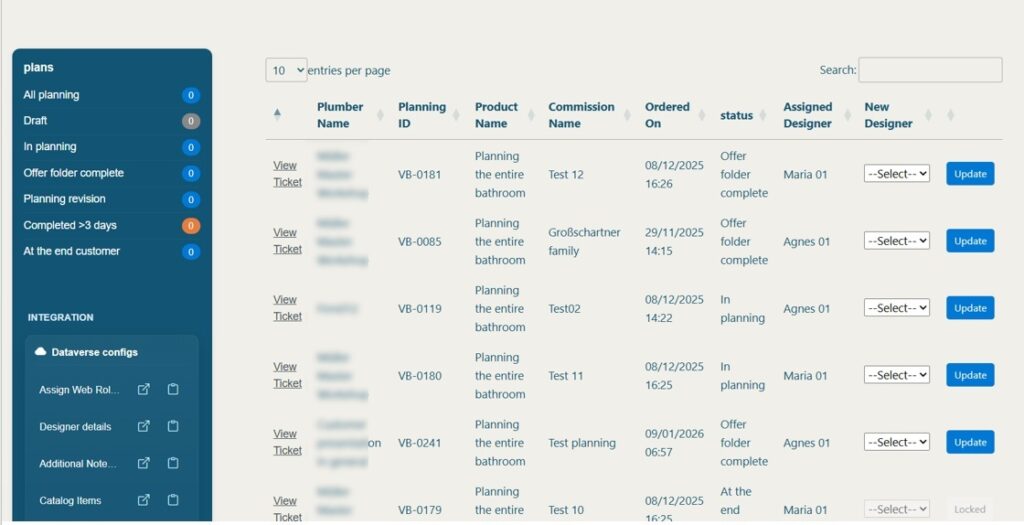
On the back end, the client has access to an admin dashboard where they can view orders and inspect order details – including installation addresses and customer notes.
The General Manager of NELO summed up our approach well when he said – “Manoj and his team are great at finding solutions and delivering results. They really understand the project and give valuable input that helps to improve it even more.”
Utility companies with lots of contracted partners face a challenge with coordination. Tracking service delivery, collecting performance data and managing referrals across multiple organisations usually involves email chains, spreadsheets and manual consolidation. A Power Pages partners portal replaces that process with a structured, self-service system that each partner can log in to.
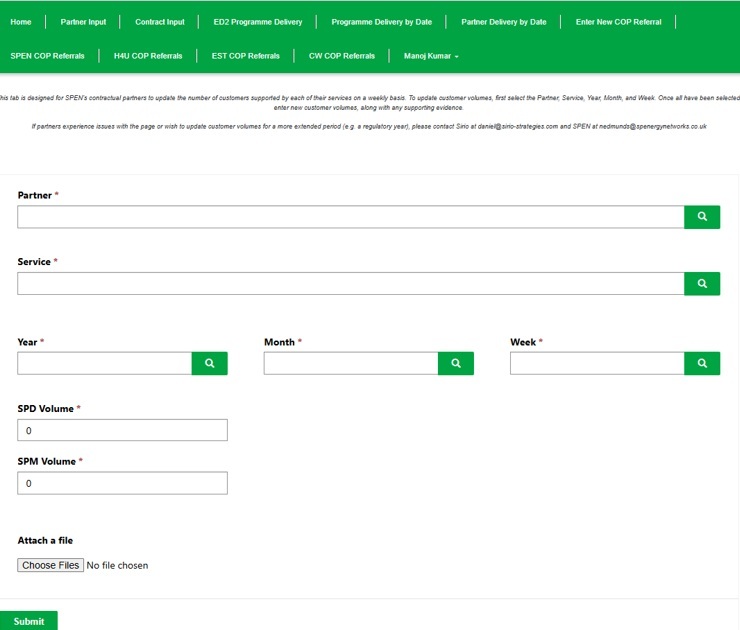
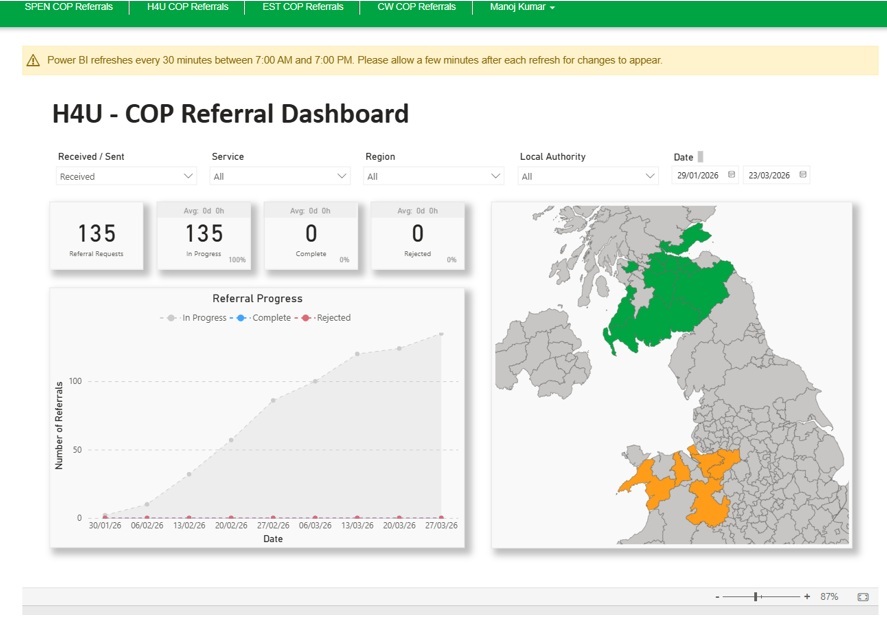
For example, we built a portal for a UK electricity provider to manage its network of partners. The Partner Input tab lets partners report weekly customer volumes by selecting their organisation, service, year, month and week, then submitting the latest figures along with any supporting evidence. This all feeds directly into performance tracking against contract commitments.
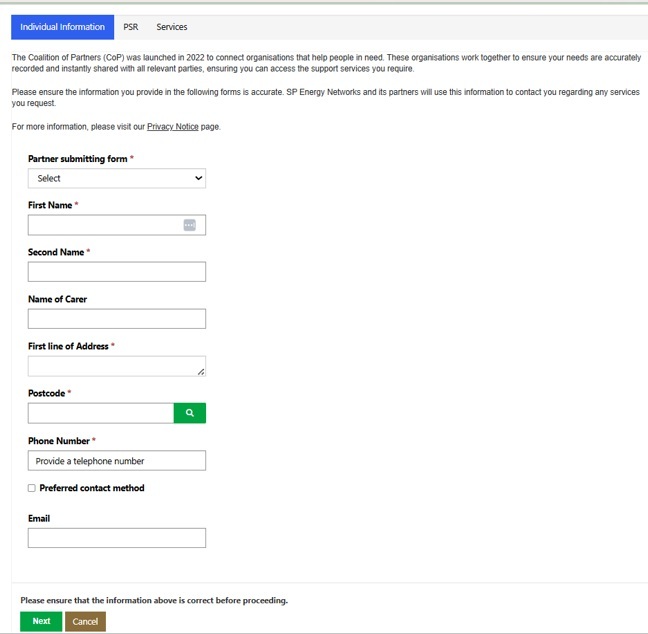
The Enter New COP Referral tab lets partners refer individuals to our client’s Priority Services Register or to support services offered by fellow members, with fields for contact details, eligibility and specific needs.
Our client confirmed the outcome himself – “I have worked with Vidi Corp on several projects, and they always complete on time and meet the specifications.”
Fractional CFOs managing reporting for multiple clients face an administrative burden. Creating Microsoft accounts for each client, assigning Power BI licences and granting access to individual reports takes time – and has to be repeated every time a new client is on board. A white-labelled Power Pages portal fixes all that, giving clients a clean login experience without any Microsoft infrastructure on their end.
One such example was a fractional CFO practice that needed a scalable way to share financial dashboards with their clients. They were already using our QuickBooks Online Power BI connector and free dashboard template to automate reporting, so we embedded those dashboards directly into a Power Pages portal.
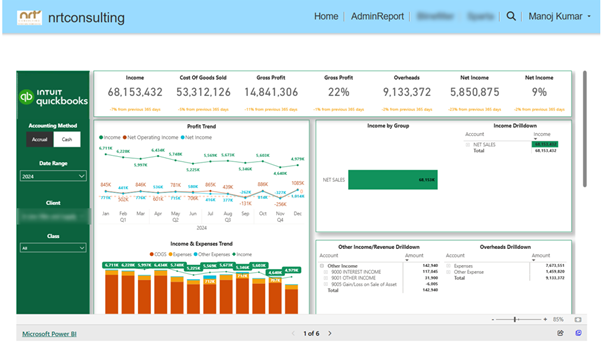
Each client logs in and sees only their own data. The portal was fully white-labelled – making it look like a proprietary technology platform built by the CFO practice itself. This setup can be replicated for any practice or agency that needs to share reports with multiple clients under their own brand. Simply contact us to ask for the same setup!
The client’s response reflected both the technical outcome and the working relationship: “The team at Vidi have been great to work with – super responsive to all my questions, even helping me out with learning and making small changes on my own. They have the knowledge to customise anything you need, and their fees are very reasonable.” If this model fits how your practice shares reports, get in touch, and we can walk you through how it works.
Public health agencies often have huge volumes of data that could inform action at a national scale, but they lack an accessible way to share it with those who need it most. Publishing raw datasets or internal reports does little to drive change. What is needed is a public-facing portal that turns complex data into clear, navigable visuals for anyone to use.
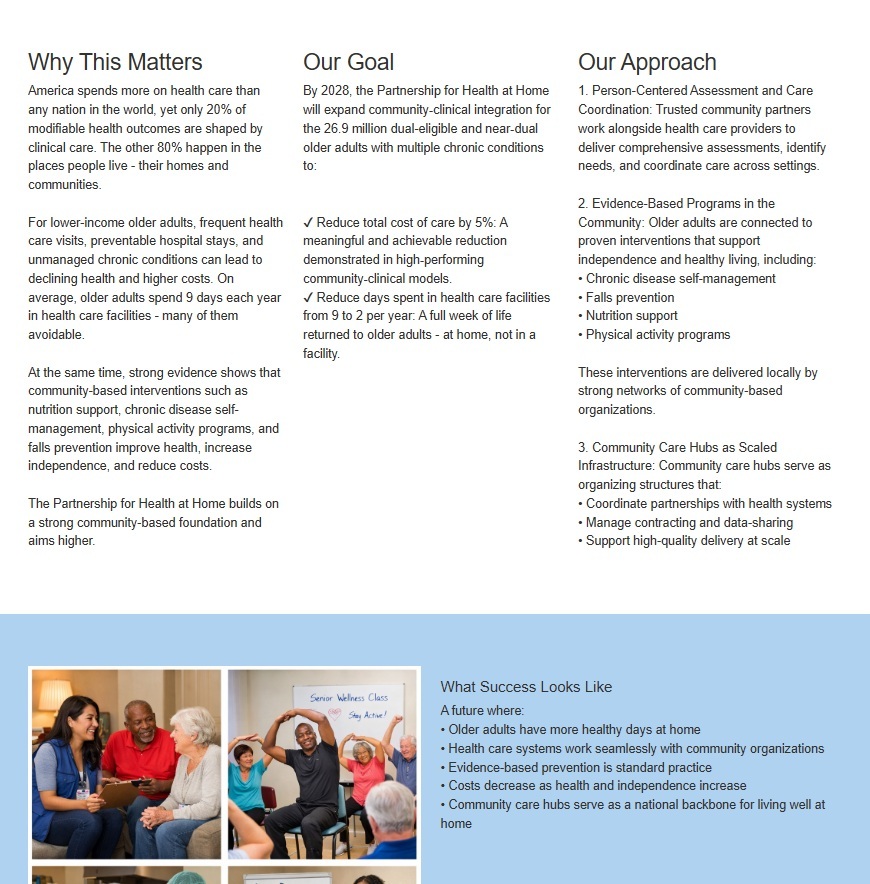
We built this Power Pages portal for the Centers for Disease Control and Prevention (CDC) as part of a major US initiative to prevent one million heart attacks in the next five years. The landing page gives an idea of just how big of a challenge that is, and where the opportunities lie – across the whole disease prevention landscape, through care model gaps and in underserved populations.
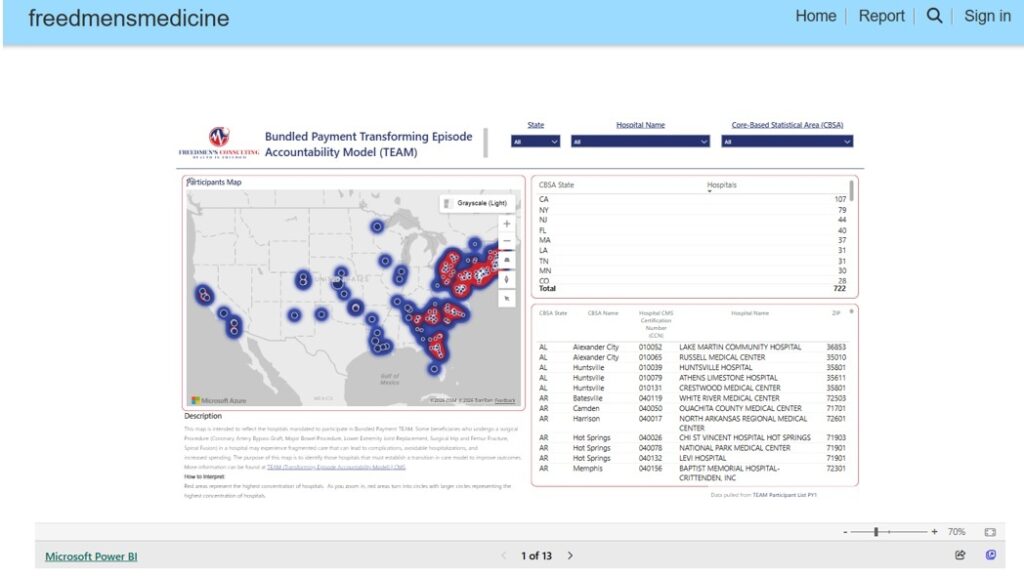
And then our dashboard development consultants created the interactive Power BI reports which give users a real-time look at how health outcomes are panning out for older folk all across the US. Each of these reports draws on public data from CMS – so you’ll see Medicare Advantage enrolment, Special Needs Plan coverage, ACO participation, quality performance and the spread of Community Care Hubs mapped out for the whole country. Users can zoom in and out to see the geographic variations in care models, spot areas with high concentrations of people who might be eligible for help, get a sense of where Community Care Hubs are operating currently, and find the gaps where help is needed but not getting to those who need it. And each of these reports has a little guide to help non-data-heads understand what they’re looking at.
This portal shows what we can achieve when we use Power Pages as a public reporting layer. Even complex, sensitive information becomes something the public can explore, ask questions about, and do something with – all without needing to log in or have any technical expertise.
Non-profits that need to share information with the public need more than just a static report wrapped in a nice cover. When you’re dealing with technical stuff that’s going to be read by the general public, the key is to make that information genuinely accessible. A Power Pages portal paired with embedded Power BI reporting can tackle both jobs at once.
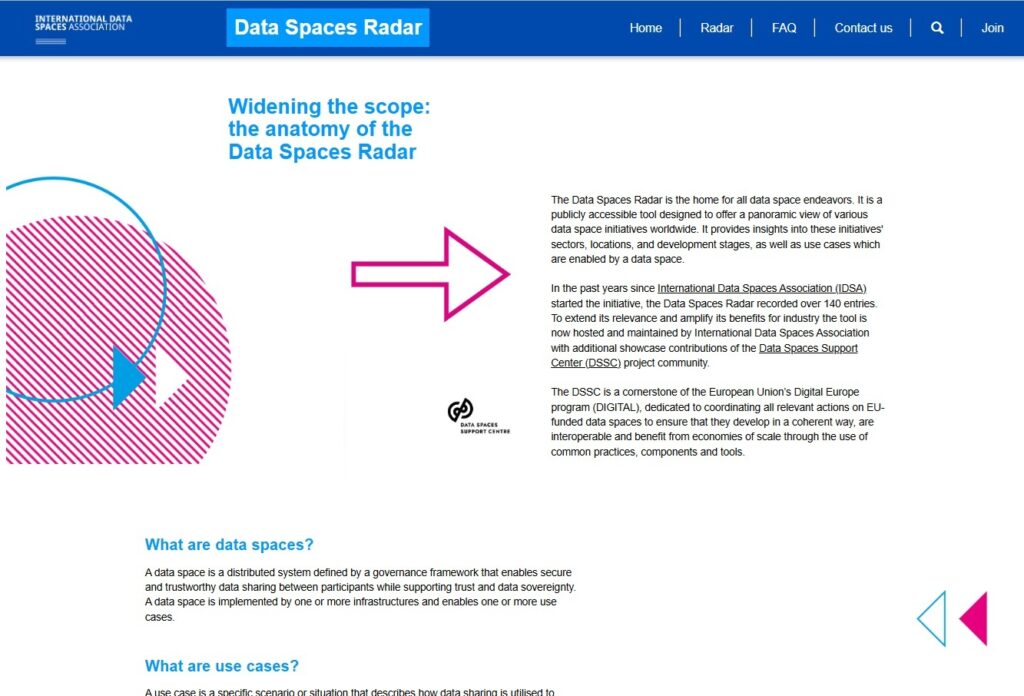
We partnered with a European non-profit that’s responsible for setting the standards for automated data exchange. This covers security, control and traceability across data spaces – not exactly a topic that makes for easy reading for most people. So the portal needed to explain it in a way that made sense, and then also present the underlying data in a way that anyone could explore. We built a Power Pages website that guides visitors through what data spaces are all about, and how the organisation does its analysis. And alongside this, our business intelligence consultants built a Power BI report that shows all the data spaces they’ve launched in Europe, letting users filter and explore by sector, country, and funding source.
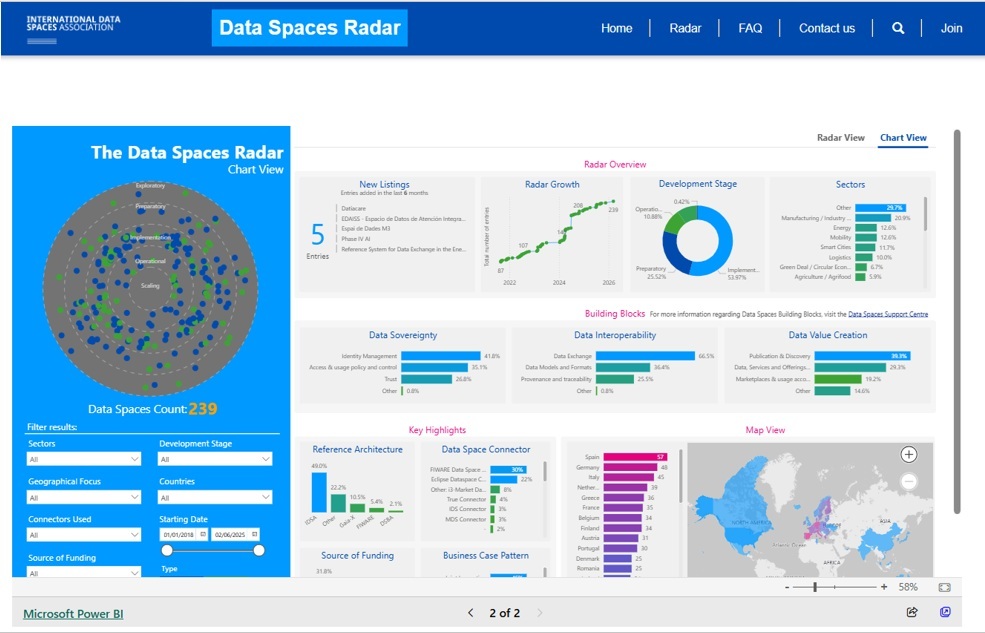
The end result is a public-facing resource that ticks all the boxes for the organisation’s reporting obligations, while also genuinely serving its audience. Visitors get to go from understanding the basic idea to exploring the actual data without leaving the portal – which makes it a practical tool for researchers, policymakers and members of the public alike.
Power Pages is built for speed. It’s got a design studio with some seriously intuitive, visual tools that let teams build and customise websites without needing to write a ton of code. That’s a big plus for organisations that want to get customer-facing processes up and running without a long development cycle or a dedicated engineering team on board.
Security is a top priority for Power Pages and it’s built in right from the get-go. You get role-based permissions, data encryption and real-time monitoring on tap. One thing to keep in mind when setting up a new site: don’t build it in the default environment – go for a dedicated environment instead. That way, administrators can get proper control over permissions and security configuration from the word go.
Power Pages connects with all the usual suspects – Power BI, Power Automate, Dataverse and Dynamics 365. This means data from a portal can flow directly into existing workflows, reports can be embedded without needing third-party tools, and automated processes can be triggered by user actions on the site. For organisations already using the Microsoft ecosystem, integration needs minimal additional setup.
Power Pages runs on Microsoft Azure, which means the underlying infrastructure scales with demand. Whether a portal is serving fifty users or fifty thousand, the architecture handles it without needing manual intervention or infrastructure changes on your end.
The platform has a wide range of templates and starter layouts that can be adapted using themes, styles and component combinations. Teams can start from a blank page or build from an existing template depending on how much structure they need. For more dynamic content requirements, Power Pages supports the Liquid template language, giving developers fine-grained control over how content is rendered all from within the platform.
As a cloud-based platform, Power Pages lets administrators and developers manage and update sites from anywhere, without needing to maintain any local infrastructure. Updates, configuration changes and content edits are all handled through the browser-based design studio.
Power Pages is built around two core layers: a front end that users interact with directly, and a back end that handles data storage, processing and security. Knowing how these bits work together will give you a better idea of what the platform can and can’t do – and why it’s suited to enterprise-grade use cases.
The front end is what visitors actually see & interact with. This is everything from the web pages to the data input forms and the lists that pull in information from connected databases. With page layouts, headers, footers, and dynamic content all built from web templates that happily work with Liquid expressions and template tags, developers can knock up structured, data-driven pages without having to start from scratch and build their own web infrastructure.
The back end is where data lives and Power Pages has got this one covered. It talks natively to several Microsoft services, and we mean, several, including Dataverse – which acts as the master data storage layer, keeping all the records in line and easily accessible. Then there’s Azure Active Directory doing the authentication bit and deciding who gets to see what and under what conditions, and Power Automate taking care of the workflow automation – so whether it’s a form being submitted, a record being updated or just some random action on the site, Power Automate gets the processes kicked off.
Power Pages uses a web role system to decide what each user can see and do once they’re inside a portal – and to be honest, it’s pretty neat. You assign a role to a user and that role determines which pages, forms, and data they get to see. So an ops team member might get access to operations data and dashboards while an HR type gets just the bits that are HR-related – even if they’re both logging in to the same site. And it’s all done through a role-based approach, so access is super- granular and you hardly ever get any users stumbling across information that’s not supposed to be theirs. And it also means you can have a single portal serving all sorts of different users without having to build separate sites for each one.
Microsoft offers a range of different pricing plans for Power Pages, so whether you’re a small business or a big enterprise, you can choose one that fits.
These options should give you plenty of choices to fit in with your budget and your needs.
Our example sites are just the tip of the iceberg when it comes to what Power Pages can do. Whether you need a customer portal, a reporting hub for your partners, a public-facing data platform or an e-commerce shop, the same basic platform can be moulded to fit your needs.
If you have a use case in mind – or you’re still trying to figure out what you need – get in touch with Vidi Corp, and we’ll sit down with you to talk it through.


